
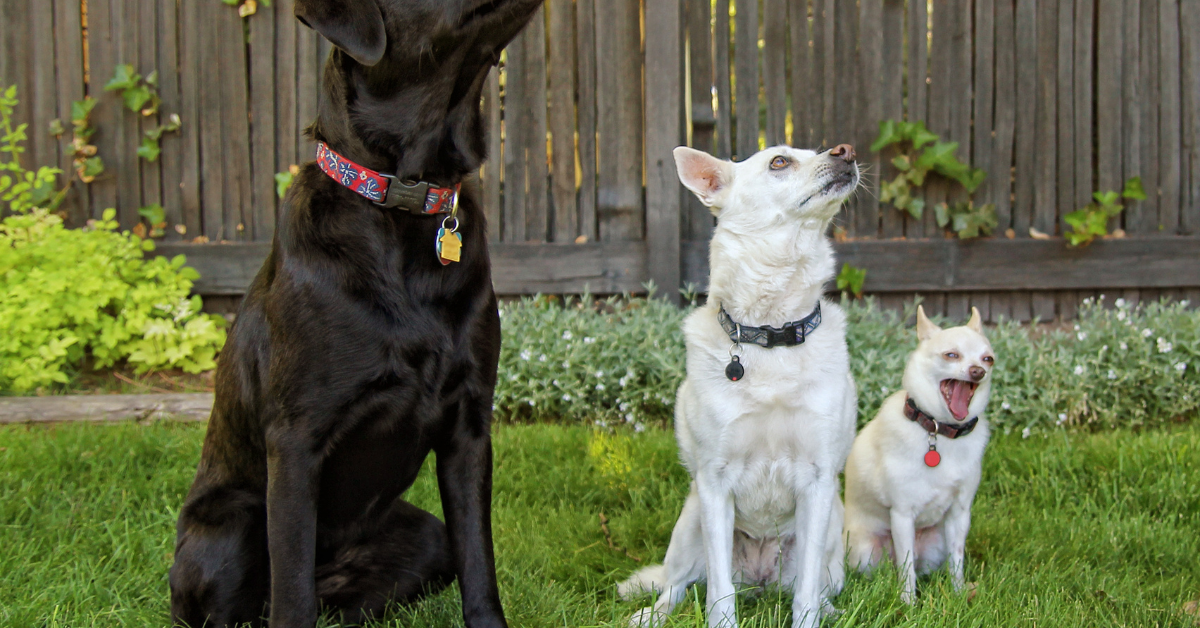
More dogs, more joy, more poo
Anyone with two or three dogs will tell you it's the best kind of chaos. They play together, keep each other company while you're at work and turn every walk into an event. But there's one part of multi-dog life nobody puts on the adoption poster: the backyard fills up fast.
If you've noticed the yard getting away from you since the second or third dog arrived, you're not imagining it. Here's why it happens, how often you really need to scoop, and how to keep the lawn and your dogs healthy.
How much poo does a dog produce a day?
Most adult dogs go once or twice a day, depending on their size, diet and age. Puppies and dogs on high-fibre diets can go more often.
That means a single dog can leave somewhere between seven and fourteen piles a week in the yard if they do most of their business at home. Add a second dog and you're looking at up to 28 piles a week. With three, it can easily pass 40.
Most people don't think of it in numbers until they're out there with a bag. We certainly notice it on our runs. At one Porirua property, there was a week when only one of the dogs was home, and the visit was noticeably lighter and quicker than usual. The difference a single dog makes is surprisingly big.
Why does the yard get worse faster with more than one dog?
It isn't just the number of piles. A few other things happen when dogs share a yard.
- They often choose the same spots, so waste concentrates in a few areas and the grass there suffers.
- They run and play together, which treads waste into the lawn and spreads it along fence lines.
- Some dogs like to dig, and holes and dips trap waste where it's harder to find.
- Bigger dogs produce bigger piles, and a mix of sizes means some piles are easy to miss.
On a three-dog property in Taita, the lawn had potholes from digging and the grass was long in places. To get everything, we searched the yard in straight lines one way, then again at right angles, and it filled two large bags. That's typical for a multi-dog yard that hasn't been cleared for a little while.
How often should you pick up dog poo with multiple dogs?
With two dogs, at least weekly. With three or more, twice a week is better, especially in a standard Wellington backyard where the dogs use most of the space.
The reason is simple maths. A fortnight's worth of waste from three dogs is a lot of piles, and by the end of that fortnight, the older ones have broken down into the grass, attracted flies or been spread around by the dogs. Twice-weekly scooping keeps each clean-up quick and stops the lawn becoming a minefield.
A Whitby household with three dogs recently signed up with us for weekly visits, a common starting point for three-dog households that can step up to twice weekly if needed.
If you have a large section with plenty of room, you might get away with weekly even with three dogs. But if the kids play out there, or the dogs are using a small area, more often is kinder to everyone.
Can multiple dogs pass worms and parasites to each other?
Yes. Dogs sharing a yard can pass parasites between them, and the yard itself is often how it happens.
Roundworm, hookworm, whipworm and giardia can all be spread through faeces. Some parasite eggs can survive in soil for a long time, and dogs pick them up by sniffing, licking their paws or eating grass in contaminated areas. That means if one dog has worms, the others are at risk too, and they can keep reinfecting each other even after treatment if the yard isn't cleared.
Regular scooping is one of the simplest ways to break that cycle. Combine it with worming all your dogs on the same schedule, as recommended by your vet, and keep an eye out for changes in their poo. Worms, blood, mucus or a sudden change in consistency are all worth mentioning to your vet.
How do you stop multiple dogs from ruining the lawn?
You probably won't keep it looking like a bowling green, but you can stop it turning into mud and brown patches.
- Scoop often, so waste doesn't sit and burn the grass
- Water the main urine spots regularly to dilute the nitrogen
- Train the dogs to use one area of the yard, such as a bark or gravel patch
- Fill in digging holes and reseed bare patches in spring and autumn
- Rotate access if you can, fencing off part of the lawn to let it recover
Does adding a second dog double the clean-up?
Often it more than doubles it. Two dogs don't just produce twice as much waste, they also tend to play harder, run the same tracks along the fence and churn up the lawn in wet weather. Waste that would have sat in one spot gets trodden in and spread around, which makes it slower to find and remove cleanly.
If you're thinking about a second dog, plan your scooping routine before they arrive. It's much easier to start the habit early than to catch up on a yard that has got away from you.
A dedicated toilet area is the biggest win for multi-dog households. It takes some patience to train, but once the dogs are using it, the rest of the lawn stays far healthier and the clean-up is concentrated in one place.
Making multi-dog life easier
More dogs means more love and more mess. The key is keeping on top of it before it builds up, with scooping that matches how many dogs you have. Weekly for two, twice a week for three or more, and a bit of lawn care to keep the grass going.
If you'd like a hand, PooPals looks after multi-dog yards across Wellington, the Hutt Valley and Porirua. We scoop on a schedule that suits your household, check for any warning signs in the waste and let you know if something looks off.