TITLE: Is It Illegal Not to Pick Up Dog Poo in NZ?
Alternatives: 1. Dog Poo Fines in NZ: What the Law Actually Says 2. Is Not Picking Up After Your Dog Illegal in New Zealand?
META DESCRIPTION: Yes, it's against the law. Here's what the Dog Control Act 1996 and local bylaws require, and the fines involved for NZ dog owners.
BODY:
Is it illegal not to pick up after your dog in New Zealand?
Yes. Under New Zealand's Dog Control Act 1996, dog owners have a legal duty to remove their dog's faeces from any public place or from private land that is not their own, and to dispose of it properly. This obligation is then enforced locally through each council's own dog control bylaw, which is where the actual fines are set. In other words, the requirement to clean up comes from national legislation, but the fine you would actually face comes from your local council.
This article is general information to help you understand where the rules come from, not legal advice, and the exact figures below can change over time, so it is worth checking your own council's current bylaw if you want the latest numbers.
What does the Dog Control Act 1996 actually say?
The Dog Control Act 1996 is the piece of national legislation that sets the framework for dog ownership across New Zealand, covering everything from registration and microchipping through to control in public places and, relevantly here, the duty to clean up after your dog. It requires owners to remove faeces their dog leaves behind in public areas or on someone else's property, rather than leaving it for someone else to deal with.
The Act itself sets the general obligation and gives councils the power to make their own bylaws and infringement fee schedules to enforce it locally. That is why you will not find one single national dollar figure for a dog poo fine, each council sets its own.
How much is the fine for not picking up dog poo?
Fines vary by council, but they are real and enforceable. Hutt City Council, for example, sets a $300 infringement fee under its Dog Control Bylaw 2015 for an owner who fails to immediately remove their dog's faeces from a public place or land that is not their own. That figure gives a good sense of the range councils in the Wellington region tend to work with for this particular offence, though it is not automatically the same figure everywhere.
Wellington City, Porirua and Upper Hutt each maintain their own dog control bylaws and fee schedules too, and it is worth checking the relevant council's current bylaw directly if you want the exact figure for where you live, since local rules and fee schedules do get reviewed and updated from time to time.
Do the rules differ between Wellington, Lower Hutt, Porirua and Upper Hutt?
The underlying obligation is the same everywhere in New Zealand, since it comes from the Dog Control Act 1996, but the practical detail, exactly how the fine is set, how enforcement happens, and what other dog control rules sit alongside it, is decided locally. Wellington City Council, Hutt City Council, Porirua City Council and Upper Hutt City Council each publish their own dog control bylaw and policy documents, and each covers cleanup requirements alongside things like registration, leash rules and exercise areas.
If you are unsure exactly what applies where you live, your local council's website is the most reliable source, since it reflects whatever the current bylaw says rather than a general national figure. It is also worth noting that most councils treat the cleanup requirement as applying regardless of whether your dog is on or off lead at the time, and regardless of whether you are in a designated dog exercise area or simply walking down the street, the obligation to remove faeces is separate from the rules about where your dog is allowed to be off leash.
Can you actually get caught?
Realistically, enforcement depends on someone seeing the incident and reporting it, or on a council officer witnessing it directly, so plenty of instances go unreported. That said, it does happen, particularly in well used public areas like beaches, parks and reserves where other dog owners and members of the public are quick to notice when someone walks away without cleaning up. Councils have, from time to time, floated ideas like public reporting to make enforcement easier, which suggests it is taken more seriously than some owners might assume.
Beyond the legal risk, there is also the simple social cost, nobody enjoys being the person whose dog's mess is left behind at the local park, and it tends to get noticed and remembered by neighbours and regulars far more than people expect.
It is also worth remembering that a fine is not the only mechanism councils have. Repeated or serious non-compliance with dog control requirements can factor into how a council classifies a dog or its owner under the wider dog control framework, which can bring extra registration requirements or closer scrutiny down the track. For the vast majority of owners this will never come up, but it is one more reason regular cleanup is worth building into the routine rather than treating as optional.
What should you do if you forget a bag?
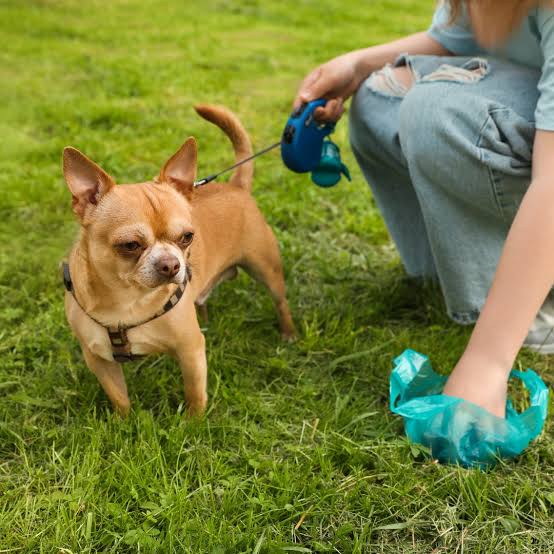
It happens to almost every dog owner eventually. The safest approach is to use whatever is available, a stick, a spare bag from a nearby dispenser, even scooping with a bit of newspaper if that is genuinely all you have, rather than simply walking away. Many parks and beaches in the Wellington region have bag dispensers precisely because councils know this happens, but they do run out, so it is worth building the habit of keeping a spare roll in the car or by the front door as backup.
Keeping on top of it without the stress
Most owners are not trying to avoid the rules, life is just busy, and the yard or the local park is easy to overlook on a hectic day. Whether it is a public reserve or your own backyard, the underlying principle is the same, waste left behind creates a problem for someone else, whether that is a council officer, a neighbour, or your own family walking barefoot across the lawn.
If keeping the backyard consistently clean and compliant feels like one task too many, PooPals offers weekly and fortnightly dog waste removal across Wellington City, Lower Hutt, Porirua and Upper Hutt, with police vetted staff, medical grade hygiene practices, gate photo confirmation and a 24 hour service guarantee. It takes the daily pickup job off your plate entirely, and five percent of profits go back to local animal shelters.