
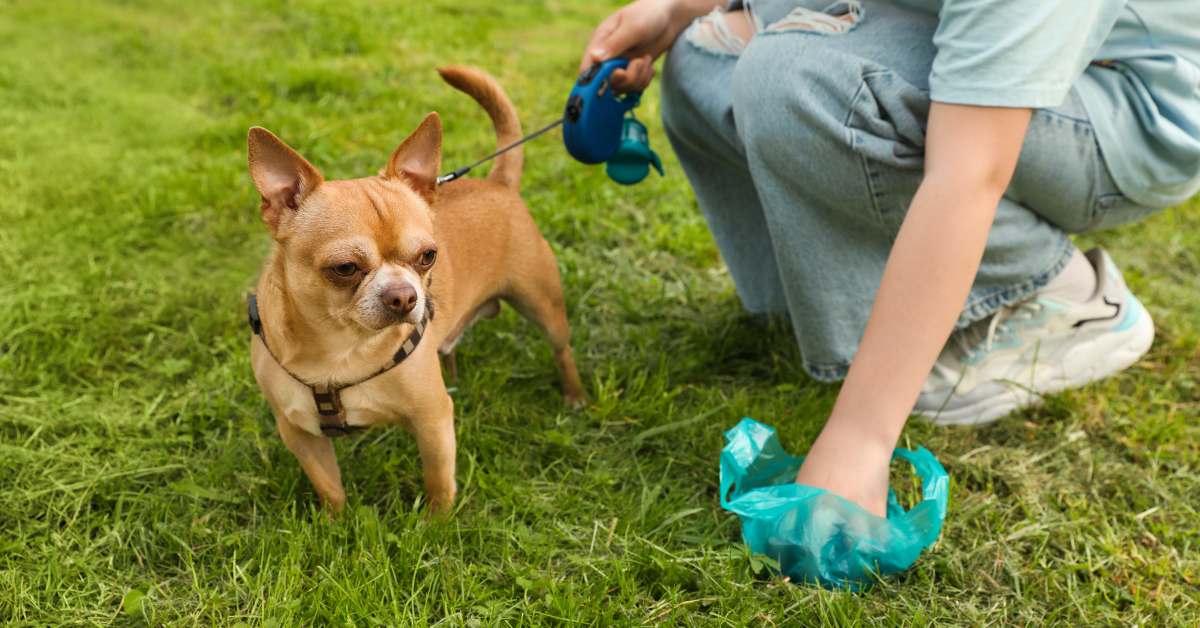
The health check you do every day without realising
Nobody gets a dog for the poo. But if you're the one picking it up, you're also in the best position to spot when something isn't right. A dog's poo is one of the simplest everyday indicators of their health, and small changes can be an early sign of diet issues, parasites or illness.
You don't need to examine every pile in detail. A quick glance as you scoop is enough to know what's normal for your dog, so you'll notice when it changes. Here's what to look for.
What does healthy dog poo look like?
Healthy dog poo is usually:
- Chocolate brown in colour
- Firm but not hard, and holds its shape when picked up
- Log-shaped and in segments
- Free from mucus, blood, worms or anything unusual
- Similar in size and amount from day to day
What's normal varies a little between dogs. Diet, size and age all play a part, and raw-fed dogs often have smaller, firmer, paler poo. The most useful thing is to know your own dog's normal, so you can spot a change quickly.
What do different dog poo colours mean?
Colour changes are often down to diet, but some are worth paying attention to.
- Green can mean your dog has been eating grass, but can also point to other problems if it continues
- Yellow or orange can suggest food moving through too fast, or in some cases liver or gallbladder issues
- Grey or greasy-looking poo can indicate a problem digesting fat
- Red streaks usually mean fresh blood from the lower gut
- Black, tarry poo can mean bleeding higher in the digestive system and needs prompt attention
- White specks may be worm segments, or simply bone in a raw diet
A single odd-coloured poo after a change in food isn't usually cause for alarm. If a change lasts more than a day or two, or your dog seems unwell, call your vet.
What does it mean if my dog's poo is runny or hard?
Soft or runny poo is common and often caused by a sudden diet change, scavenging, stress or a mild tummy bug. If it settles within a day and your dog is otherwise bright and eating, it's usually not a worry. Make sure they have plenty of water, as diarrhoea can dehydrate a dog quickly.
Poo that is very hard, dry or crumbly can be a sign of dehydration, not enough fibre or too much bone in the diet. Straining to go, or not going at all for more than a day or two, is worth checking with your vet.
Call your vet straight away if your dog has diarrhoea along with vomiting, lethargy, loss of appetite, blood in the poo, or if they're a puppy or elderly dog, as they can go downhill faster.
How do you know if your dog has worms from their poo?
Some worms are visible in poo. Roundworms look like strands of spaghetti, and tapeworm segments look like grains of rice, sometimes also seen around the dog's bottom. Many worm infections, though, can't be seen with the naked eye at all, which is why regular worming matters even when everything looks normal.
Other signs of worms include scooting, a pot-bellied look in puppies, weight loss, a dull coat and diarrhoea. If you spot worms, talk to your vet about the right treatment and worm any other pets in the household at the same time.
This is something we keep an eye on as part of our visits. Because we see a dog's poo every week, we're often the first to notice a change, and if we spot worms, blood or anything unusual, we let the owner know so they can check in with their vet.
Why is old dog poo a health risk in the yard?
Once you've checked it, pick it up. Dog poo left on the lawn can carry parasites such as roundworm and hookworm, as well as bacteria like E. coli and giardia. Some parasite eggs can survive in soil for a long time, so a yard that isn't cleared regularly can keep reinfecting your dog, and pose a risk to children who play there.
Don't bury it in the garden or add it to your compost either. Home compost doesn't get hot enough to kill the parasites, and burying it simply moves the problem underground. Bag it and put it in your general rubbish.
How often should a dog poo?
Most adult dogs poo once or twice a day, often fairly soon after a meal. Puppies go more often, sometimes four or five times a day, and some older dogs go less. Dogs on high-fibre or bulky diets tend to go more frequently than dogs on raw or very digestible foods.
What matters most is what's normal for your dog. A sudden change in how often they go is worth noticing, whether it's more often with soft poo or not at all for a day or two.
The number of dogs in a household makes a big difference to the yard as well. At one Porirua property we visit, there was a week when only one of the dogs was home, and there was noticeably less to pick up than usual. If you have several dogs, it's worth knowing roughly how many times a day each one goes, so you can tell when someone's routine has changed.
Keep an eye out for straining, crying or repeatedly squatting with little result. Those are signs to call your vet.
Keeping an eye on your dog's health
A quick look at your dog's poo each day is one of the easiest ways to stay on top of their health. Know what's normal, notice changes early and call your vet if something doesn't look right or lasts more than a day or two.
If you'd like a second set of eyes, PooPals scoops yards across Wellington, the Hutt Valley and Porirua every week. As well as keeping your yard clean, we watch for health warning signs and let you know if we spot anything you should check with your vet.